Overview
The Product
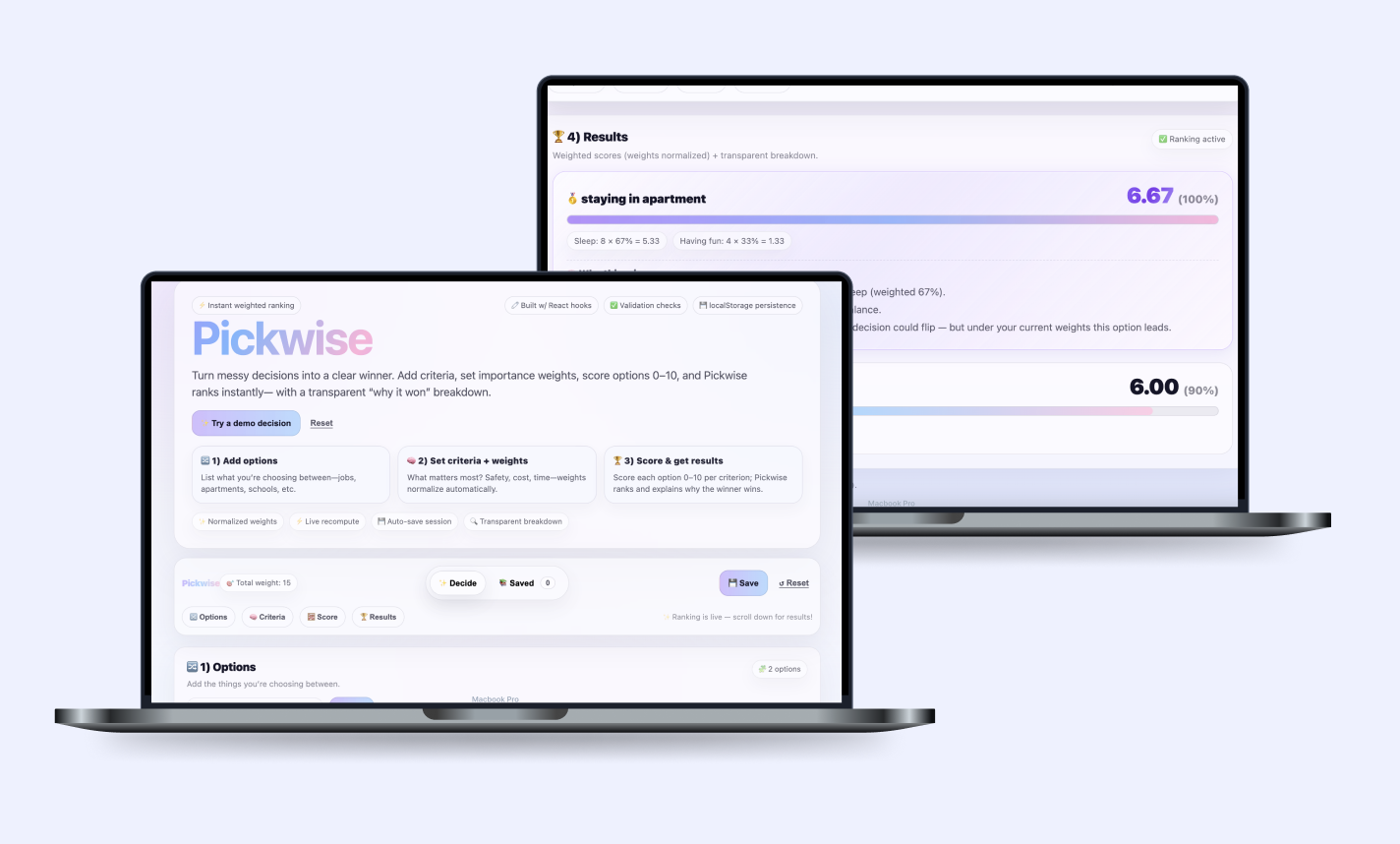
Pickwise helps users compare options using a weighted decision framework.
Users can add the choices they are deciding between, define what criteria
matter most, assign weights to those criteria, and score each option from
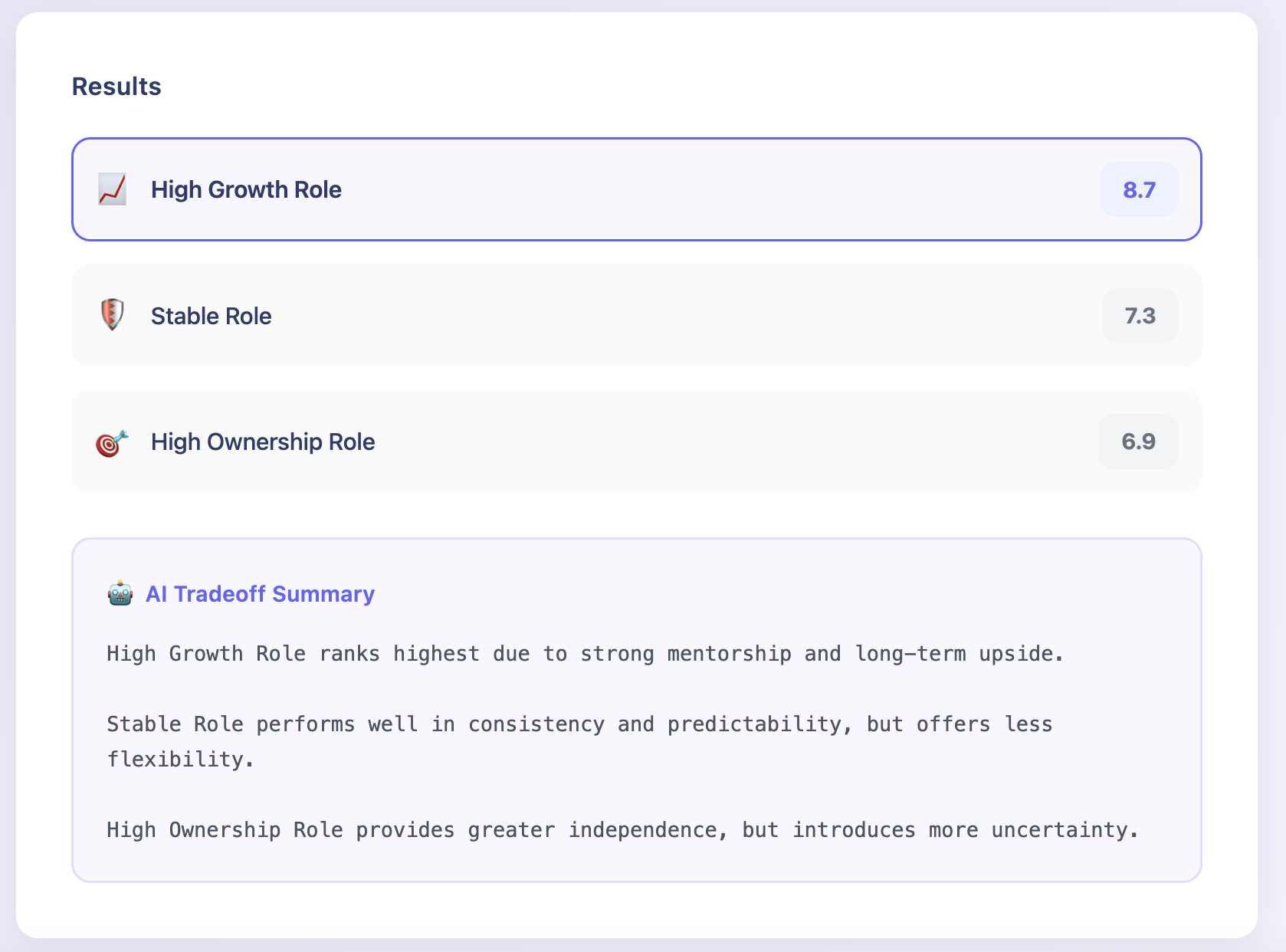
0–10. The app then calculates a ranked result and provides a breakdown of
why the top choice leads.
I built this project to explore the overlap between product thinking and
engineering. I wanted to create something that felt intuitive from a user
standpoint, but also grounded in clear logic and explainability.
Product Thinking
Why Pickwise
I wanted to build something that bridged product strategy and engineering.
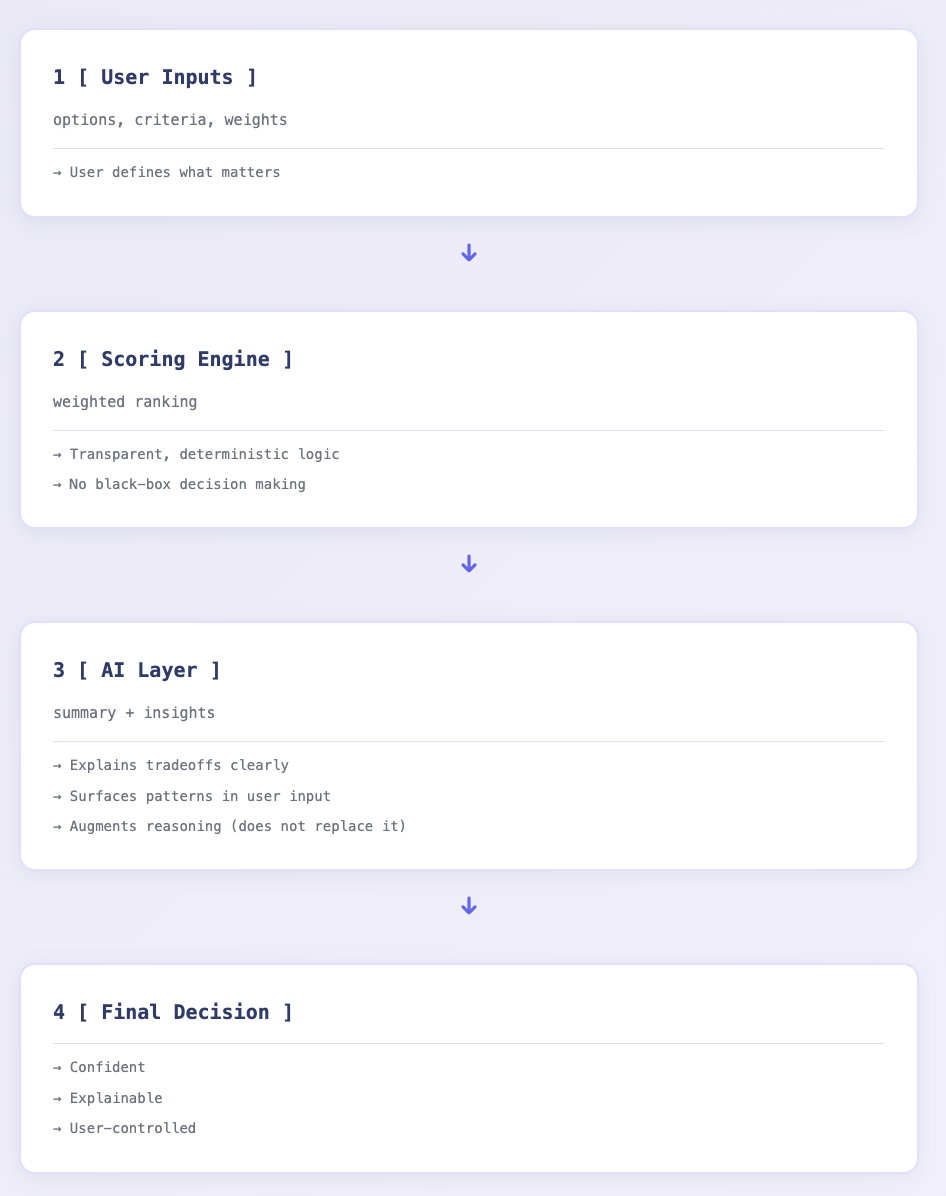
Many tools either lean too heavily on intuition or too heavily on black-box automation.
Pickwise starts with a deterministic scoring system so users can stay in control,
understand what matters most, and make decisions with more confidence.
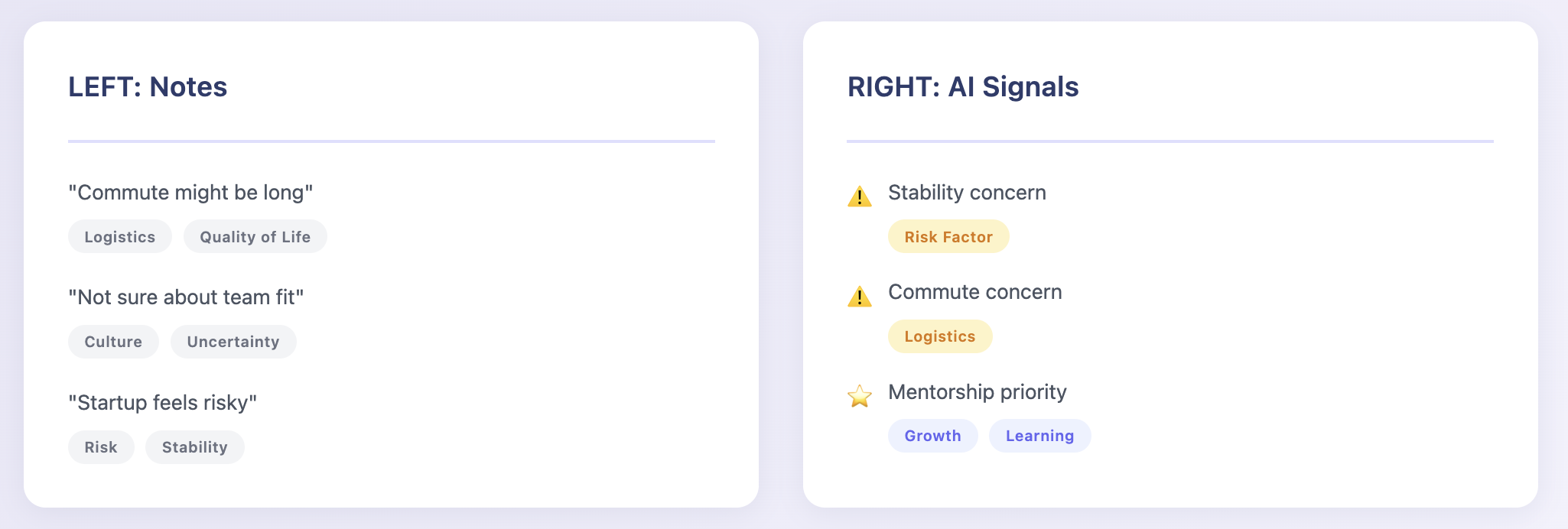
The broader vision is to create a hybrid decision product: one that begins with
structured logic and later incorporates AI-assisted reasoning without sacrificing transparency.
Code Highlights
Important Snippets from the App
Since Pickwise was something I coded myself, I wanted the case study to show not just
the interface, but the technical thinking that shaped the product. These snippets highlight
the parts of the app that were most important to resilience, logic, and explainability.
function safeLoadCurrent() {
  const raw = localStorage.getItem(STORAGE_KEY);
  if (!raw) return null;
  const parsed = safeJsonParse(raw);
  if (
    !parsed ||
    !Array.isArray(parsed.criteria) ||
    !Array.isArray(parsed.options) ||
    typeof parsed.scores !== "object"
  ) {
    return null;
  }
  return parsed;
}
I added a guarded loader so malformed or corrupted browser data would not
break the app. This made the product more resilient and protected the user experience.
useEffect(() => {
  localStorage.setItem(
    STORAGE_KEY,
    JSON.stringify({ criteria, options, scores, optionNotes })
  );
}, [criteria, options, scores, optionNotes]);

useEffect(() => {
  localStorage.setItem(HISTORY_KEY, JSON.stringify(history));
}, [history]);
This let Pickwise continuously save user input in the background. From a product perspective,
that reduced friction because users did not need an account or manual save flow to preserve progress.
const breakdownForOption = (optionId) => {
  if (!hasEnoughToRank) return [];
  return criteria.map((c) => {
    const w = Number(c.weight);
    const weightShare = totalWeight > 0 ? w / totalWeight : 0;
    const rawScore = scores[optionId]?.[c.id];
    const scoreNum =
      typeof rawScore === "number" ? rawScore : Number(rawScore) || 0;
    const contribution = scoreNum * weightShare;

    return {
      criterionId: c.id,
      name: normalizeName(c.name) || "(unnamed)",
      weightShare,
      score: scoreNum,
      contribution,
    };
  });
};
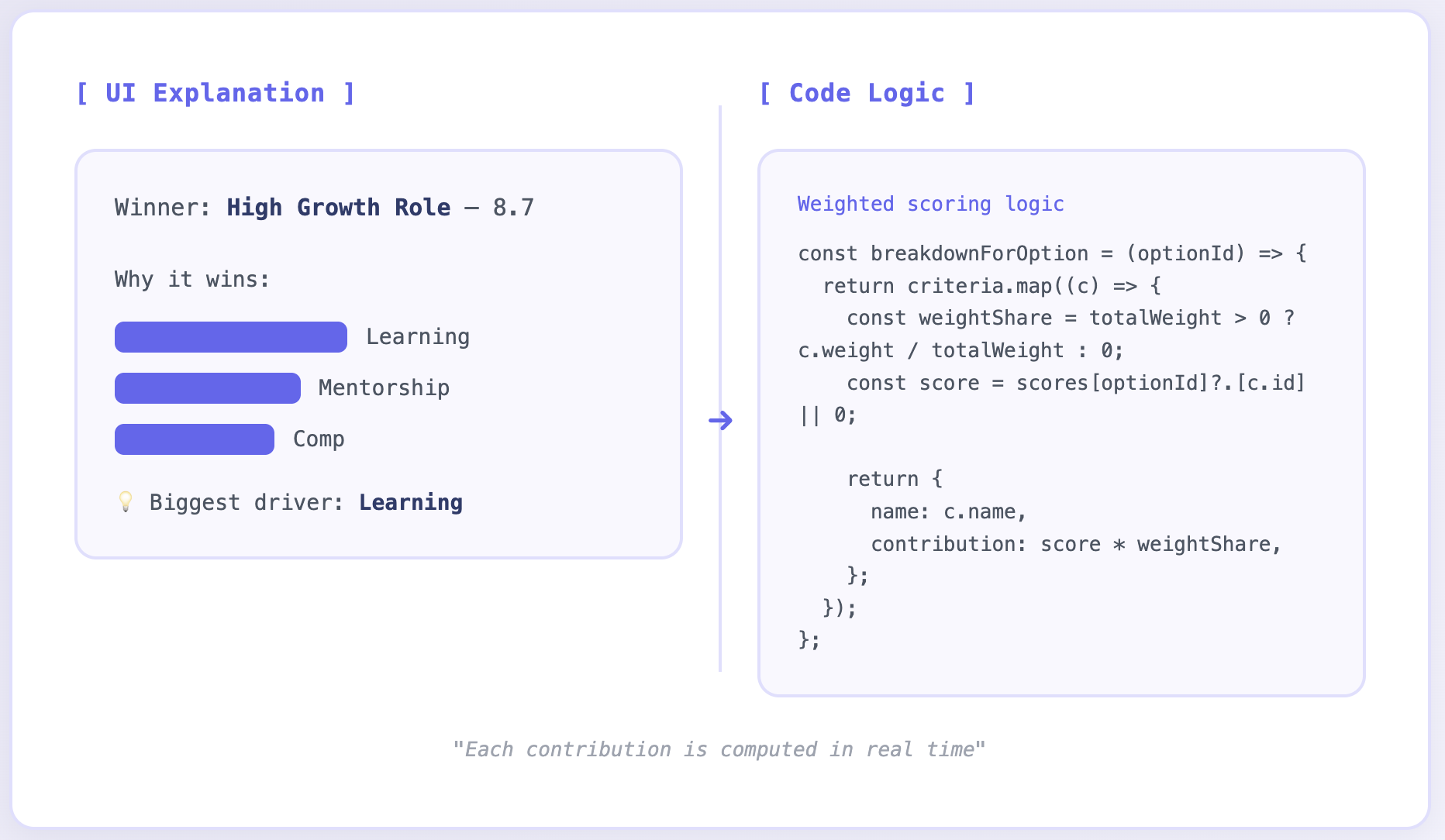
This is the core scoring engine. Instead of relying on raw inputs alone,
the app converts each criterion into a normalized share of the total and
calculates how much each one contributes to the final score.
const ranked = useMemo(() => {
  return [...options]
    .map((o) => ({ ...o, total: totalForOption(o.id) }))
    .sort((a, b) => (b.total ?? -Infinity) - (a.total ?? -Infinity));
}, [options, criteria, scores, totalWeight]);
I used useMemo so rankings would update efficiently as users changed inputs,
while keeping the experience fast and responsive.
lines.push(
  `${winnerName} wins because its biggest strength is ${primary.name} (weighted ${Math.round(
    (primary.weightShare || 0) * 100
  )}%).`
);

if (secondary) {
  lines.push(
    `It also scores well on ${secondary.name}, giving it a strong overall balance.`
  );
}
One of my favorite product decisions was making the output feel interpretable,
not just numerical. This explanation layer helps users understand why the winning option leads.
Add a UI screenshot, code collage, or annotated feature image here